
Film Facts

Verified Stories from the Cutting Room Floor

FilmStoryPages gathers verified film facts, production histories, casting decisions, filming locations, and creative choices from across cinema. Every entry is checked against reputable sources, so you can explore the stories behind the screen with confidence.

Casting Decisions

The Roles That Almost Weren’t

Casting can change a film’s entire trajectory. These verified stories show how chance, persistence, and bold choices created some of cinema’s most memorable performances.

Unexpected Casting Choices

Tom Selleck was offered the role of Indiana Jones but had to decline because of his commitment to Magnum, P.I. The part then went to Harrison Ford, who had already worked with George Lucas on Star Wars and American Graffiti. Ford’s blend of rugged charm and dry humour became central to the character’s identity.
Casting Against Type

Robin Williams was known for rapid-fire comedy, but in One Hour Photo he played a lonely, unsettling photo technician. Director Mark Romanek saw a quiet intensity beneath Williams’s public persona. The result was a chilling performance that surprised audiences and critics alike.

Director-Actor Collaborations

Martin Scorsese and Robert De Niro made nine feature films together, from Mean Streets to The Irishman. Their partnership was built on trust and a shared fascination with flawed, complicated characters. Akira Kurosawa and Toshiro Mifune forged a similarly legendary bond across sixteen films.

Filming Locations

Where the Stories Were Shot

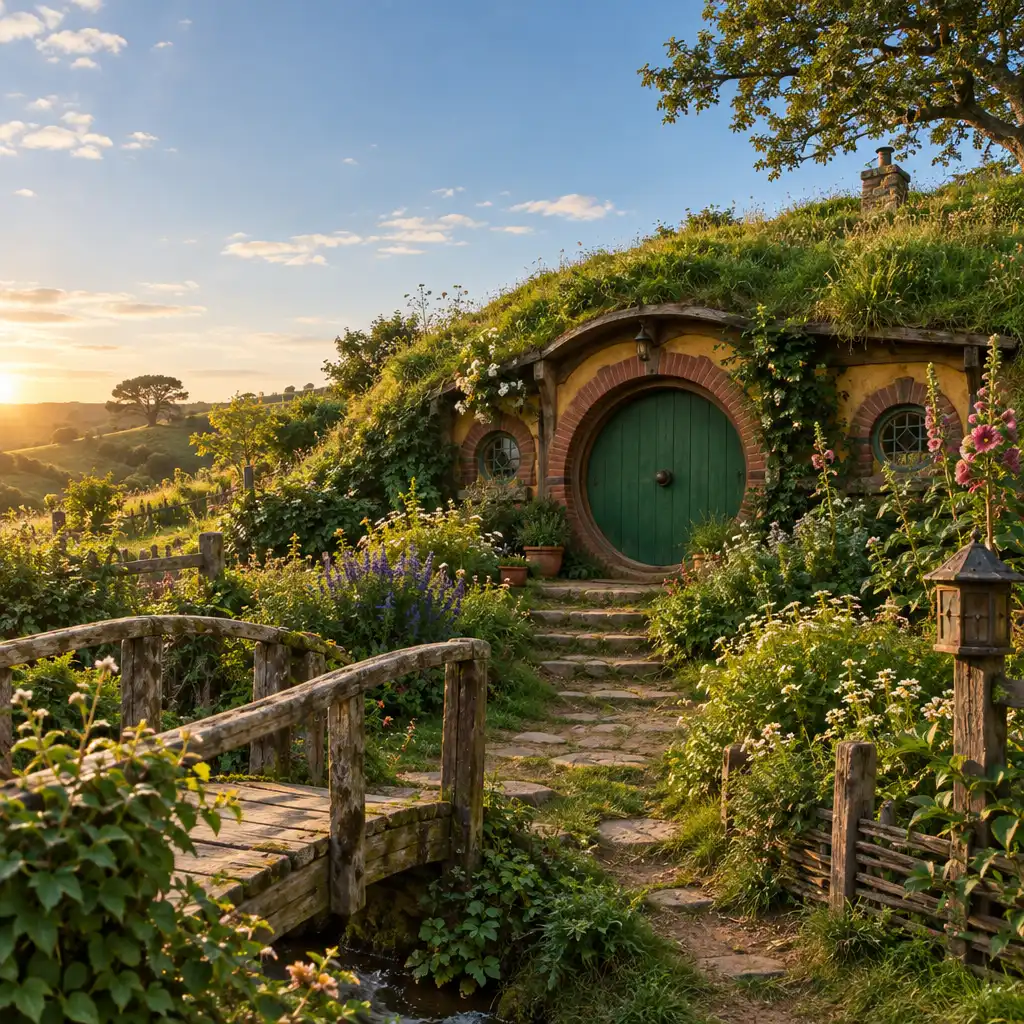
The Hobbiton movie set in Matamata, New Zealand, with a round green hobbit door nestled into a grassy hillside under golden light
The Hobbiton set in Matamata, New Zealand, was rebuilt as a permanent attraction after The Lord of the Rings and The Hobbit trilogies.

The Hobbiton set near Matamata was originally constructed for Peter Jackson’s The Lord of the Rings trilogy. After filming wrapped, the set was largely dismantled, but it was rebuilt in permanent materials for The Hobbit films. Today it remains one of New Zealand’s most visited film locations, with forty-four hobbit holes carefully integrated into the rolling Waikato landscape.

  • The exterior of the Overlook Hotel in The Shining is actually Timberline Lodge on Mount Hood, Oregon. The interior was built on a soundstage in England.
  • New Zealand’s dramatic landscapes doubled for Middle-earth, but many Lord of the Rings scenes were also filmed on private farmland and in national parks across both islands.
  • The desert planet Tatooine in Star Wars was filmed in Tunisia, where several original sets still stand in the Sahara.

Production Histories

Trouble on Set, Triumph on Screen

The mechanical shark built for Jaws was nicknamed Bruce, after Steven Spielberg’s lawyer. It repeatedly malfunctioned in salt water, forcing the crew to shoot around its absence. Spielberg turned the limitation into suspense: the shark is barely seen for much of the film, and the audience’s imagination does the terrifying work. The production ran over schedule and over budget, but the result redefined the summer blockbuster.

“The shark not working was a godsend. It made me become more like Alfred Hitchcock than like Ray Harryhausen.”

— Steven Spielberg, reflecting on the Jaws production

Jaws Production Timeline

  1. 1973 Peter Benchley’s novel is published, and producers quickly option the film rights.
  2. May 1974 Principal photography begins on Martha’s Vineyard with an unfinished script.
  3. October 1974 Filming wraps after 159 days, far beyond the planned 55-day schedule.
  4. June 1975 Jaws opens in more than 400 theatres and becomes a cultural phenomenon.

Creative Choices

Decisions That Define Cinema

Cinematography Innovations

The Steadicam allowed Garrett Brown to follow Danny through the Overlook Hotel’s corridors in The Shining with an eerie, gliding smoothness. The Matrix’s bullet-time effect combined dozens of still cameras to freeze action while the camera appeared to move, changing how action sequences were imagined.

Editing Choices

Stanley Kubrick’s match cut in 2001: A Space Odyssey — from a bone thrown into the air to a spacecraft — compresses millions of years of human evolution into a single frame. Darren Aronofsky’s rapid cutting in Requiem for a Dream creates a visceral, anxious rhythm that mirrors addiction’s grip.

Sound Design

The T-Rex roar in Jurassic Park was created by layering a baby elephant’s cry, a tiger’s snarl, and an alligator’s gurgle. The lightsaber hum in Star Wars combined an old film projector’s motor with the buzz of a television picture tube, giving the weapon an otherworldly yet familiar voice.

Behind-the-Scenes Stories

Moments the Camera Didn’t Capture

More Set Stories

  • The tiger in The Hangover was real, and the actors were warned to stay behind a marked line during the scene.
  • The chestburster scene in Alien genuinely startled the cast; most of them did not know exactly what would happen when the creature emerged.
  • During The Lord of the Rings, Viggo Mortensen bonded so closely with his horse that he later bought it from its owner.

Film Craft Techniques

The Tools Behind the Magic

Practical Effects vs CGI

Blade Runner used detailed miniature models and matte paintings to build its rain-soaked future Los Angeles. Avatar pushed digital performance capture and virtual cameras to create Pandora. Practical effects often feel tactile and grounded, while CGI can realise impossible worlds — the best films often combine both.

Lighting Techniques

Chiaroscuro lighting — strong contrasts between light and shadow — defined film noir classics like The Maltese Falcon. High-key lighting, with its bright, even illumination, became a signature of studio comedies and musicals. Each approach shapes mood as much as dialogue or performance.

Camera Movement

The dolly zoom in Vertigo — pulling the camera back while zooming in — creates a disorienting sense of depth. The long tracking shot through the Copacabana in Goodfellas pulls the audience into Henry Hill’s seductive world in one unbroken movement.

Genre-Specific Facts

Facts by Genre

  • 2001: A Space Odyssey used large-scale rotating sets and detailed models years before digital effects became standard.
  • The Star Wars lightsaber sound was created by combining a film projector motor with a television tube hum.
  • Blade Runner built its city with miniatures, neon, and rain-soaked practical sets that still influence sci-fi design.

Director and Actor Spotlights

The People Behind the Frame

Jane Campion

Director · New Zealand

Jane Campion became the first woman to win the Palme d’Or at Cannes for The Piano in 1993. She often works with intimate, character-driven stories and has described her approach as “finding the emotional truth inside the landscape.”

Taika Waititi

Director, Actor · New Zealand

Taika Waititi won an Academy Award for his short film Two Cars, One Night and later brought his distinctive humour to Thor: Ragnarok. He often casts local New Zealand actors and weaves Māori perspectives into mainstream cinema.

Cinema History Milestones

How Cinema Got Here

  1. 1895 The Lumière brothers hold the first public film screening in Paris.
  2. 1927 The Jazz Singer introduces synchronised dialogue, changing cinema forever.
  3. 1939 The Wizard of Oz and Gone with the Wind showcase Technicolor’s emotional power.
  4. 1975 The Steadicam debuts, allowing smooth moving shots without tracks.
  5. 1995 Toy Story becomes the first fully computer-animated feature film.

These milestones echo through the facts above: the Steadicam’s invention made the corridors of The Shining possible, and the practical models of early cinema still influence how filmmakers blend real and digital worlds today.